Shockwave Therapy for Plantar Fasciitis in Missoula
If your first steps out of bed feel like stepping on a tack, you're not alone. Plantar fasciitis is one of the most common causes of heel pain, and in a town full of trail runners, hikers, skiers and people who spend all day on their feet, we see a lot of it. For most people it improves with time and simple home care. For some, it hangs on for months. That stubborn, long-lasting heel pain is where shockwave therapy can help.
What is plantar fasciitis?
The plantar fascia is a thick band of tissue that runs along the bottom of your foot, from your heel bone to your toes. It supports your arch and absorbs force every time your foot hits the ground. When it's overloaded, it can become irritated and painful where it attaches to the heel.
Common signs include:
- Sharp pain in the bottom of the heel with your first steps in the morning
- Pain after sitting for a while, which eases once you get moving
- Pain that returns after long periods of standing, walking or running
- Tenderness when you press on the inside of the heel
Why does it hang on?
Plantar fasciitis usually comes from load: more miles, more hours standing, a new job on hard floors, a jump in training, worn-out shoes, or tight calves that put extra strain on the foot. Short-term irritation often settles with rest and stretching. When the problem goes on for months, it tends to become less about inflammation and more about tissue that has stopped healing well. That's why rest alone often doesn't fix it.
How shockwave therapy helps
Shockwave therapy, also called extracorporeal shockwave therapy or ESWT, sends pulses of acoustic pressure waves through the skin into the painful area. The goal is to increase blood flow and restart the body's repair process in tissue that has stalled.
Chronic plantar fasciitis is one of the most studied uses of shockwave therapy, and it has been used for heel pain for more than two decades. It's a good option to consider when heel pain has lasted several months despite stretching, better shoes and rest.
What people like about it:
- It's non-invasive. No injections, no medication and no surgery.
- It's quick. Treatment takes about 10 minutes.
- There's very little downtime. You can walk out and go about your day. Just skip high-impact activity for 24 hours.
What a treatment plan looks like
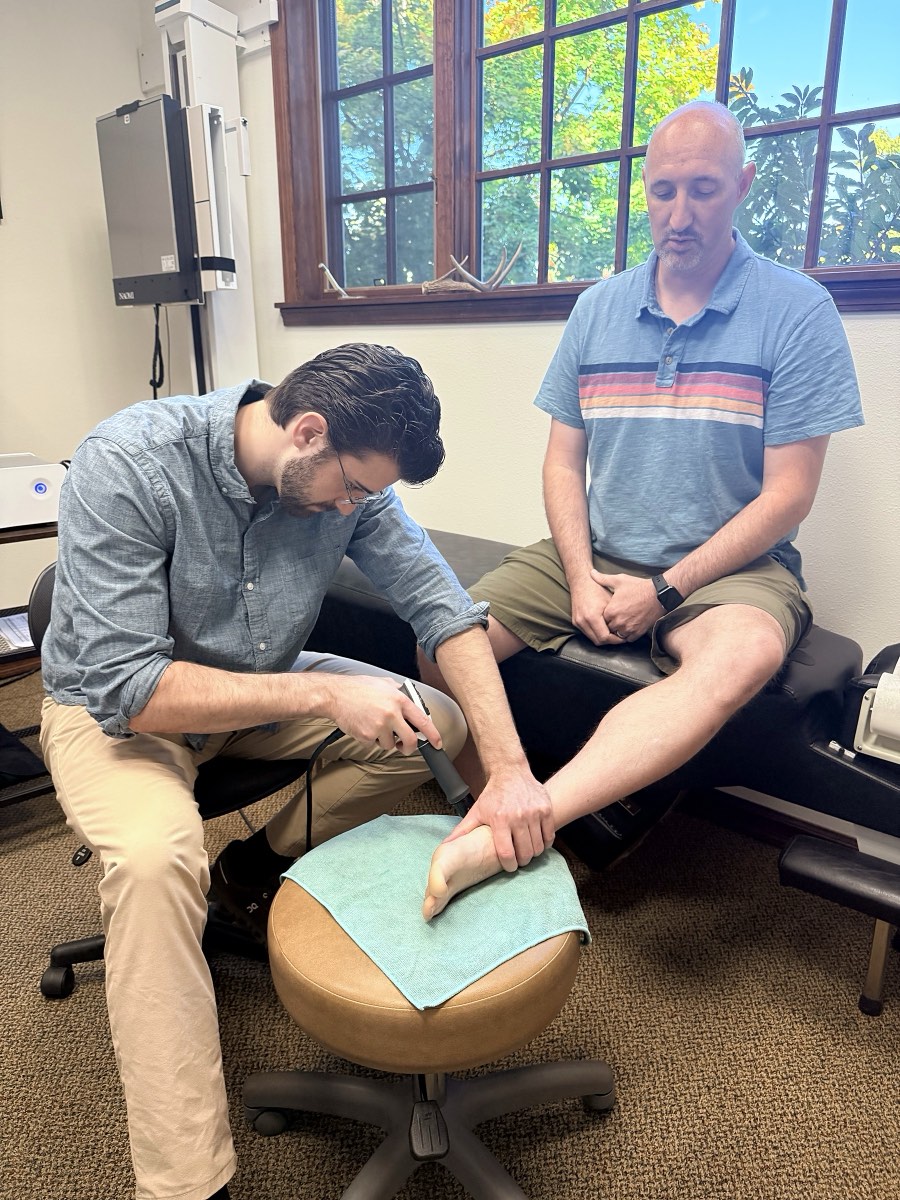
At Life Chiropractic, shockwave for plantar fasciitis starts with an assessment. Dr. Golden looks at your history, your foot and how you move (gait analysis), and confirms that plantar fasciitis is what's going on.
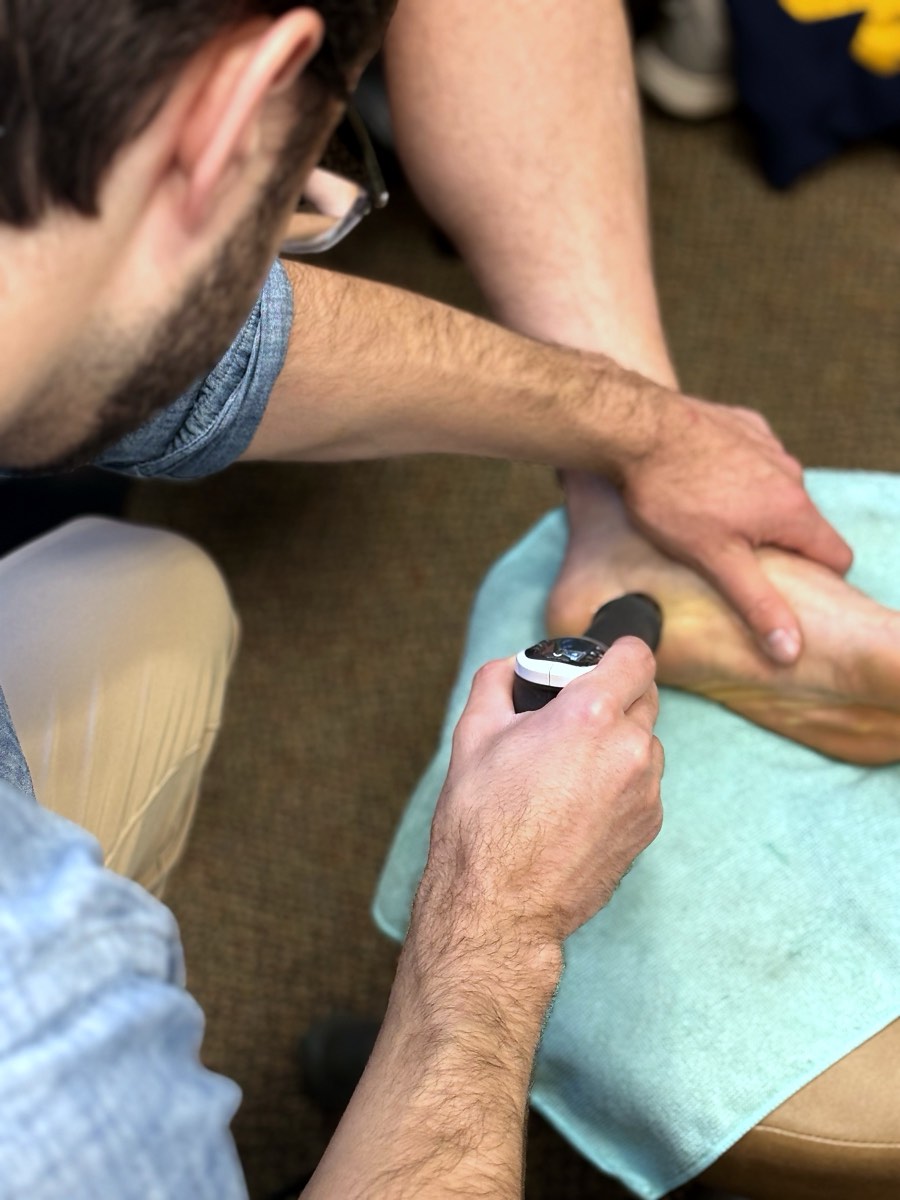
During treatment you'll feel a strong, rapid tapping over your heel. It can be uncomfortable, and the intensity is adjusted to what you can tolerate.
Every plan depends on how severe your plantar fasciitis is and on your daily routine, so your progress is protected between sessions. Dr. Golden typically recommends 3 to 6 sessions, one a week. After each session, stay mobile, but avoid high-impact activity such as running or jumping for 24 hours.
Shockwave works best as part of a complete plan. Dr. Golden pairs it with the things that address why your heel got overloaded in the first place:
- Calf and foot stretching and strengthening
- Changes to footwear and how you build up your training or time on your feet
- Chiropractic care for the ankles, knees, hips and low back when your movement patterns are part of the problem
Things you can start today
- Stretch your calves. Tight calves are one of the most common contributors. Stretch them a few times a day, especially before your first steps in the morning.
- Roll your arch. Rolling the bottom of your foot over a ball or a frozen water bottle can ease soreness.
- Check your shoes. Supportive, not-worn-out shoes make a difference, and so does not going barefoot on hard floors.
- Adjust your load. Cut back on the miles or standing time that flare it up, then build back gradually.
When to see someone else first
Not all heel pain is plantar fasciitis. See your doctor promptly if your pain started with a fall or a sudden pop, if the heel is very swollen, red or warm, if you have numbness or tingling in the foot, or if the pain is severe at night or at rest.
Heel pain that won't quit?
If you've been dealing with plantar fasciitis for months and home care hasn't done it, shockwave therapy may be the next step. Learn more about shockwave therapy at Life Chiropractic, book a shockwave session with Dr. Golden, or start with a free consultation to see if it's right for you.