
Shockwave Therapy for Tennis Elbow and Golfer's Elbow in Missoula
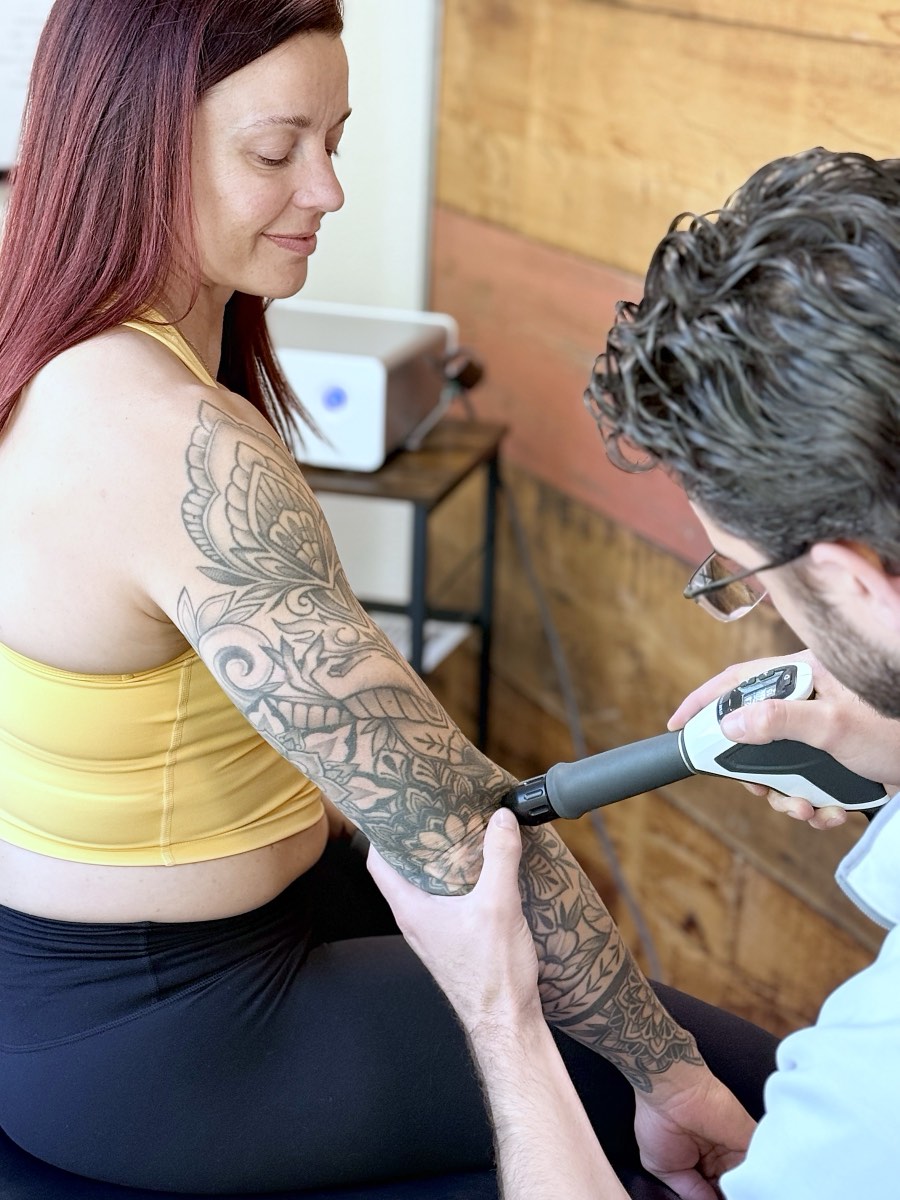
Lifting a coffee mug, shaking hands, turning a wrench, pulling on a climbing hold: when your elbow hurts, everyday grip tasks start to sting. Tennis elbow and golfer's elbow are two of the most common causes of elbow pain, and despite the names, most people who get them don't play tennis or golf. In Missoula we see them in climbers, pickleball players, carpenters, mechanics, fly anglers and people who spend all day on a mouse. Most cases settle with time and smart changes. For the ones that hang on for months, shockwave therapy can help.
Tennis elbow vs. golfer's elbow
Both are overload problems in the tendons that attach your forearm muscles to the elbow. The difference is which side hurts.
- Tennis elbow (lateral elbow pain) is on the outside of the elbow. It involves the tendons of the muscles that extend your wrist and fingers. It usually hurts to grip, lift with your palm down, or twist a lid or doorknob.
- Golfer's elbow (medial elbow pain) is on the inside of the elbow. It involves the tendons of the muscles that flex your wrist and turn your palm down. It usually hurts to grip, lift with your palm up, or swing.
Common signs of both:
- Pain at the bony point on the outside or inside of the elbow, sometimes spreading into the forearm
- A weaker grip, or dropping things
- Pain that's worse with gripping, lifting or repetitive hand work and eases with rest
- Stiffness first thing in the morning
Why it lingers
These problems usually start with a jump in load: a new project, a long weekend of climbing or pickleball, a new tool, or more hours at the keyboard. Your forearm tendons work every time you grip, and most of us grip all day, so they rarely get a real break.
Short-term irritation often settles in a few weeks. When elbow pain goes on for months, it tends to be less about inflammation and more about tendon tissue that has stopped adapting and healing well. That's why rest alone, or another round of anti-inflammatories, often doesn't fix it.
How shockwave therapy helps stubborn cases
Shockwave therapy, also called extracorporeal shockwave therapy or ESWT, sends pulses of acoustic pressure waves through the skin into the painful tendon. The goal is to increase blood flow and restart the body's repair process in tissue that has stalled.
It's worth considering when elbow pain has lasted three months or more despite rest, bracing and exercises. Research on shockwave for elbow tendon pain is more mixed than it is for heel pain, but many people with long-standing cases find it helps, especially when it's combined with a progressive exercise program. If rehab exercises and other soft tissue treatments haven't worked, Dr. Golden will let you know whether you're a good candidate for shockwave.
- It's non-invasive. No injections, no medication and no surgery.
- It's quick. Treatment takes about 10 minutes.
- There's very little downtime. You can go back to work the same day. Go easy on heavy gripping and lifting for 24 hours.
What a treatment plan looks like
It starts with an assessment. Dr. Golden goes over your history, examines the elbow, tests your grip and wrist strength, and checks your neck and shoulder, since pain from those areas can show up at the elbow.
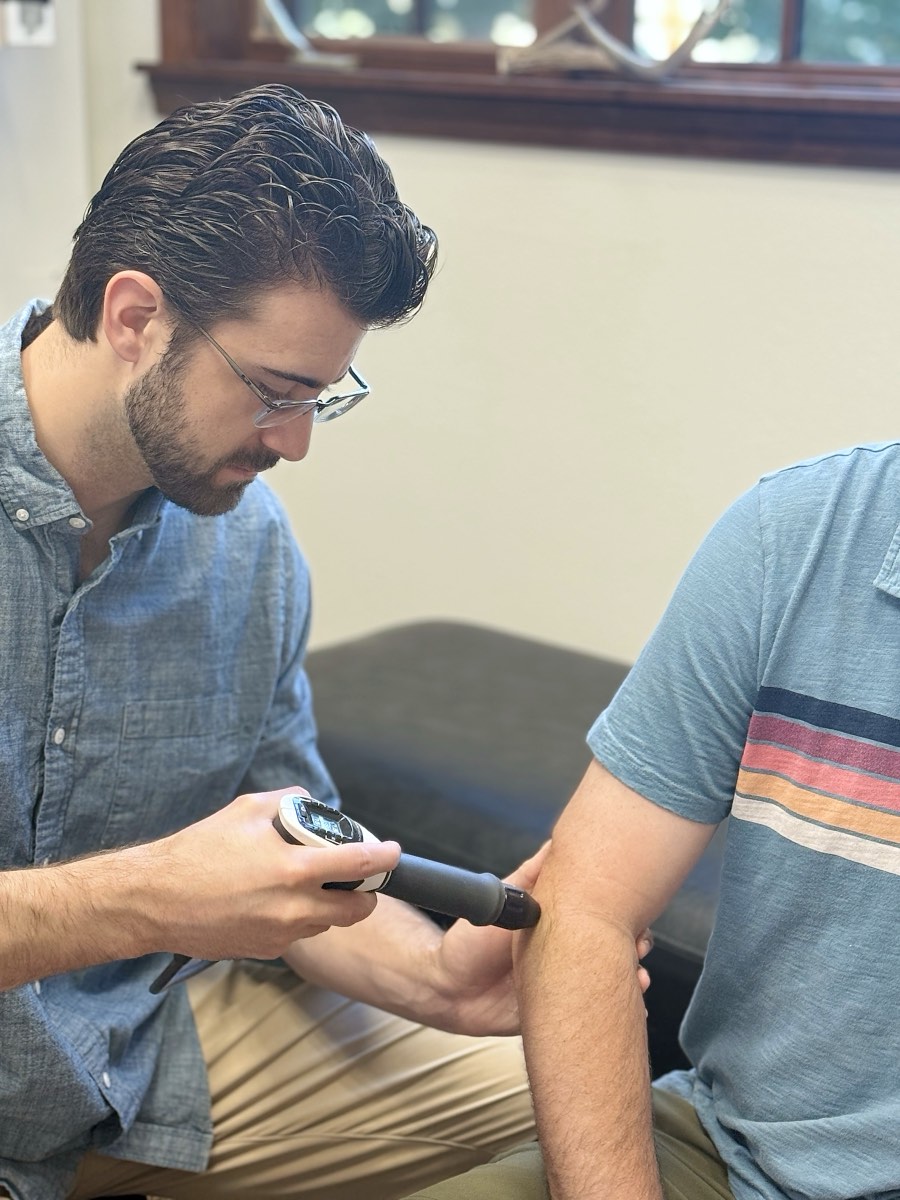
During treatment you'll feel a strong, rapid tapping over the sore tendon. It can be uncomfortable, and the intensity is adjusted to what you can tolerate. Dr. Golden typically recommends 3 to 6 sessions, once a week, depending on how long you've had the problem and what your hands do all day.
Shockwave works best as part of a complete plan that addresses why the tendon got overloaded in the first place:
- Grip and forearm loading exercises. Tendons respond to load. Gradual strengthening, starting with gentle holds and building to slow, controlled lifting, is the backbone of recovery.
- Workstation and tool changes. A different mouse or keyboard position, a thicker tool handle, a lighter grip on the racket or club, or lifting with your palm up instead of down can take pressure off the tendon while it heals.
- Neck, shoulder and wrist checks. When the neck, shoulder blade or wrist isn't moving well, the elbow often picks up the slack. Chiropractic care and myofascial work help when they're part of the problem.
Things you can start today
- Change how you grip. Use two hands for heavy objects, lift with your palm facing up when you can, and loosen your grip on tools, rackets and the steering wheel.
- Try gentle isometric holds. Rest your forearm on a table, hand off the edge, and push gently up into your other hand without letting the wrist move: the back of the hand for tennis elbow, the palm for golfer's elbow. Hold for 30 to 45 seconds at a mild, tolerable effort, and repeat a few times a day.
- Adjust your load, don't stop completely. Cut back on the climbing, pickleball or repetitive work that flares it up, then build back gradually.
- Consider a strap. A counterforce brace just below the elbow can ease pain during activity while the tendon recovers.
When to see a doctor first
Not all elbow pain is tennis or golfer's elbow. See your doctor promptly if the pain started with a fall or a sudden pop, if the elbow is very swollen, red or warm, if you can't fully bend or straighten it, if you have numbness or tingling in your hand or fingers, or if you also have significant neck pain, fever or pain at night or at rest.
Elbow pain that won't quit?
If you've been dealing with tennis elbow or golfer's elbow for months and home care hasn't done it, shockwave therapy may be the next step. Learn more about shockwave therapy at Life Chiropractic, book a shockwave session with Dr. Golden, or start with a free consultation to see if it's right for you.